
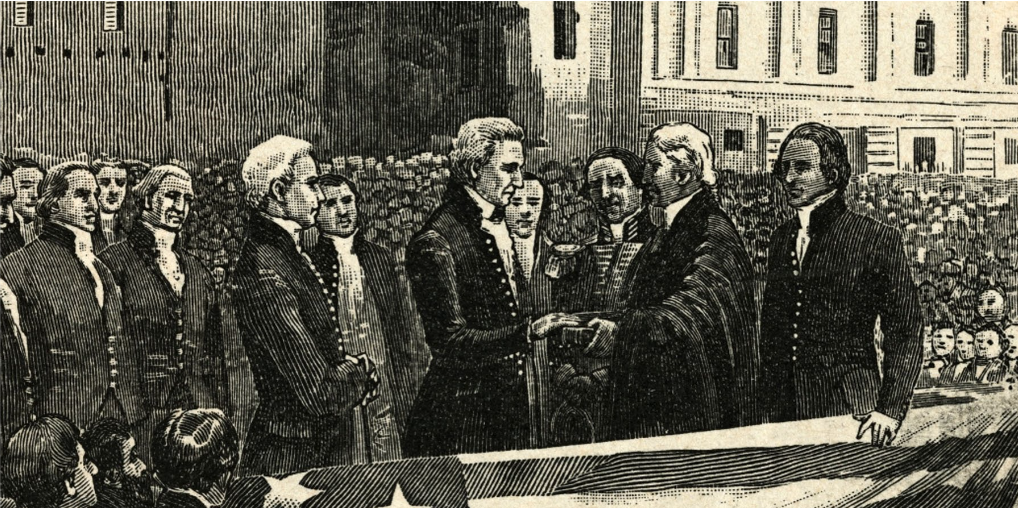
“I should be destitute of feeling if I was not deeply affected by the strong proof which my fellow-citizens have given me of their confidence in calling me to the high office whose functions I am about to assume.”
James Monroe, 1817
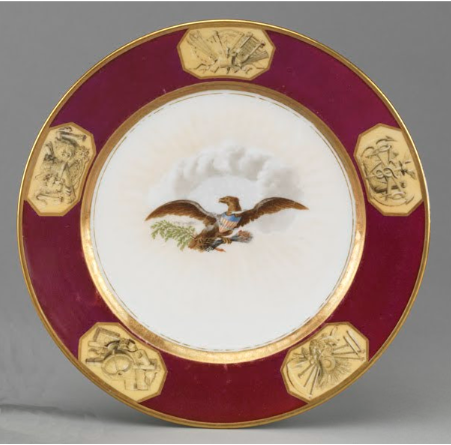
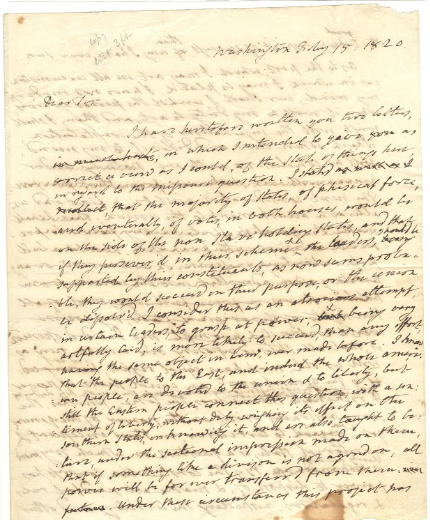
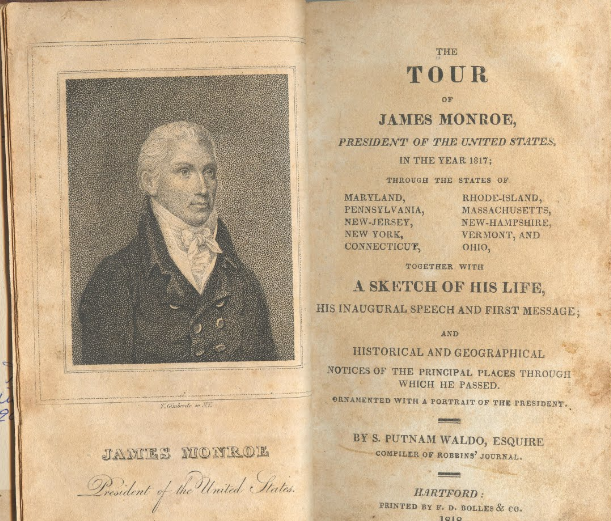
In 1816 James Monroe was elected the fifth President of the United States, winning 183 of the possible 217 electoral votes. His presidency is commonly referred to as the Era of Good Feelings, which can be attributed to hugely popular regional tours undertook in 1817-1819, as well as his cabinet decisions. Monroe largely ignored party lines when making federal appointments, which cemented his popularity and reduced political tensions. The White House was still being rebuilt after its 1814 sacking when Monroe took office, so he and his family did not move in until 1817. The furnishings of the rebuilt White House were chosen by Monroe and have been emulated by later presidents ever since. One of the defining moments of Monroe’s first term in office was the Missouri Compromise, which admitted Missouri to the Union as a slave state and Maine as a free state and prohibited the expansion of slavery north and west of the Missouri border. Although he believed slavery to be an evil, Monroe was fiercely opposed to any attempts to eradicate it entirely, so his decision to sign the Compromise was mainly to prevent immediate conflict. Another first term accomplishment was the Adams-Onis Treaty of 1819, negotiated by Secretary of State John Quincy Adams, through which the United States acquired Florida from Spain. In 1820, Monroe ran for re-election unopposed and won with just one dissenting vote in the Electoral College.
Timeline:
- 1816: Elected fifth President of the United States
- 1817: Visits northern states in first of three popular regional tours
- 1818: Tours Chesapeake Bay region
- 1819: Tours southern and western states
- 1817: Furnishes rebuilt White House in style emulated by later presidents
- 1818: Orders General Andrew Jackson to suppress hostile Indians in Spanish Florida
- 1819: Authorizes negotiation of Adams-Onis Treaty with Spain to acquire Florida
- 1820: Signs Missouri Compromise into law, delaying sectional crisis over slavery
- 1820: Elected to second presidential term with one dissenting Electoral College vote
- 1821: Meets with delegations of Native American leaders from trans-Mississippi region
You must be logged in to post a comment.