By Lily Hollar, Bowley Scholar, Summer 2026
The friendship between James Monroe and Thomas Jefferson is often discussed but not
the unlikely friendship of James Monroe and James Madison. Before the two met, Madison was
close to Monroe’s family and lived with Joseph Jones, Monroe’s uncle, in New Jersey while he
attended Princeton. However, it wasn’t until after the Revolutionary War that they would become friends, writing almost weekly. The friendship was strong for several years, even when the two Virginians ran against each other for public office. When Madison was running for Senate in 1789, Monroe originally wasn’t going to run until Patrick Henry convinced him to. Debates were held in January and when it came time to vote, Madison even voted for Monroe. In the end, Monroe lost 972 to 1,308, but Monroe was pleased with his friend’s win and decided to start a law practice.
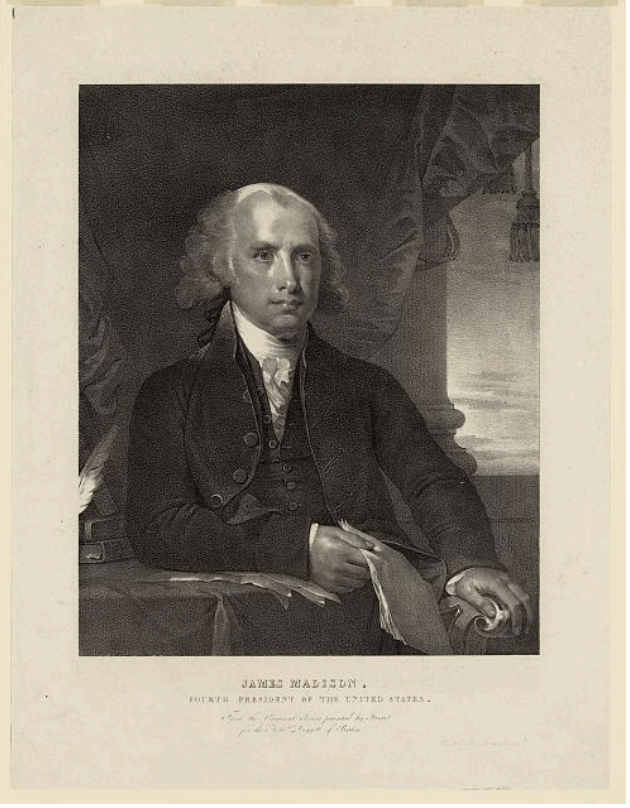
James Madison, 4th President of the United States
It wasn’t until Monroe was Minister to Great Britain under Jefferson’s administration in
1806 that things got tense. Monroe was sent to Great Britain by Madison, the Secretary of State, to re-negotiate a treaty for neutral trade since Great Britain kept impressing U.S. Ships. Monroe was an experienced diplomat, helping to secure the Louisiana Purchase for the U.S., so he believed in his ability to handle this assignment. Therefore, when he learned of William Pinkney’s assignment to join him, he felt undermined by Madison and Jefferson. When treaties
were denied by the administration, Monroe took it personally, writing “circumstances have
occurred during my services abroad which were calculated to hurt my feelings and actually did
hurt them,” to John Randolph, a fellow republican from Roanoke.
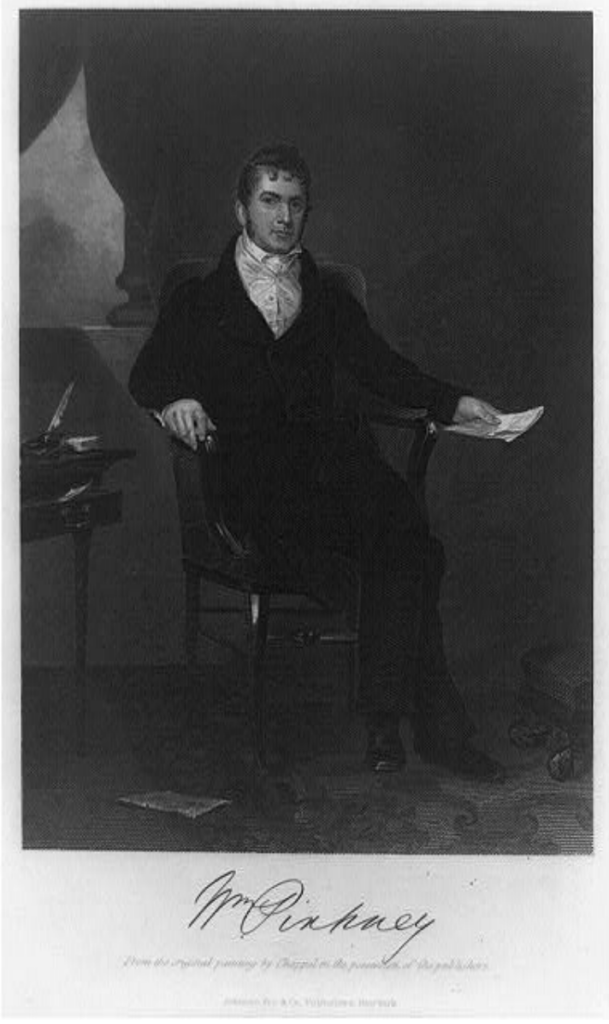
Portrait of William Pinkney, Minister to Great Britain with Monroe
Tensions rose to the point that Monroe believed that Jefferson and Madison didn’t
understand the condition in Europe as well as he did and that their requirements for the treaty
would never be accepted by Great Britain. By 1807, Monroe returned to the U.S. frustrated that
he wasn’t able to come up with a compromise that would appease Jefferson, Madison, and Great Britain. Feeling betrayed by Madison, Monroe decided to run against him as a Republican
nominee in the election of 1808. A few Republicans like Randolph supported him due to being
upset with Jefferson and Madison for being too supportive of a strong federal government.
Monroe ended up losing, but he refused to accept the loss. He wrote a self-defense to accusations of his failure to find neutrality with Great Britain explaining that Madison’s instructions would have led to war and he “knew the United States were not prepared for war.”
After publishing his self-defense blaming Madison for the failed negotiations, Monroe
and Madison did not speak for two years. During this two year period, Monroe would also refuse
to visit Jefferson at Monticello if Madison was there. In the end, it was up to Jefferson to get his
two close friends to reconcile. He wrote to Monroe explaining that “Mr Madison has appeared to be governed by the most cordial friendship for you, has manifested on every occasion the most attentive concern for whatever might befriend your fame or fortune, and been as much alive to whatever regarded you, as a brother could have been.” This was a start, as their friendship slowly re-kindled.
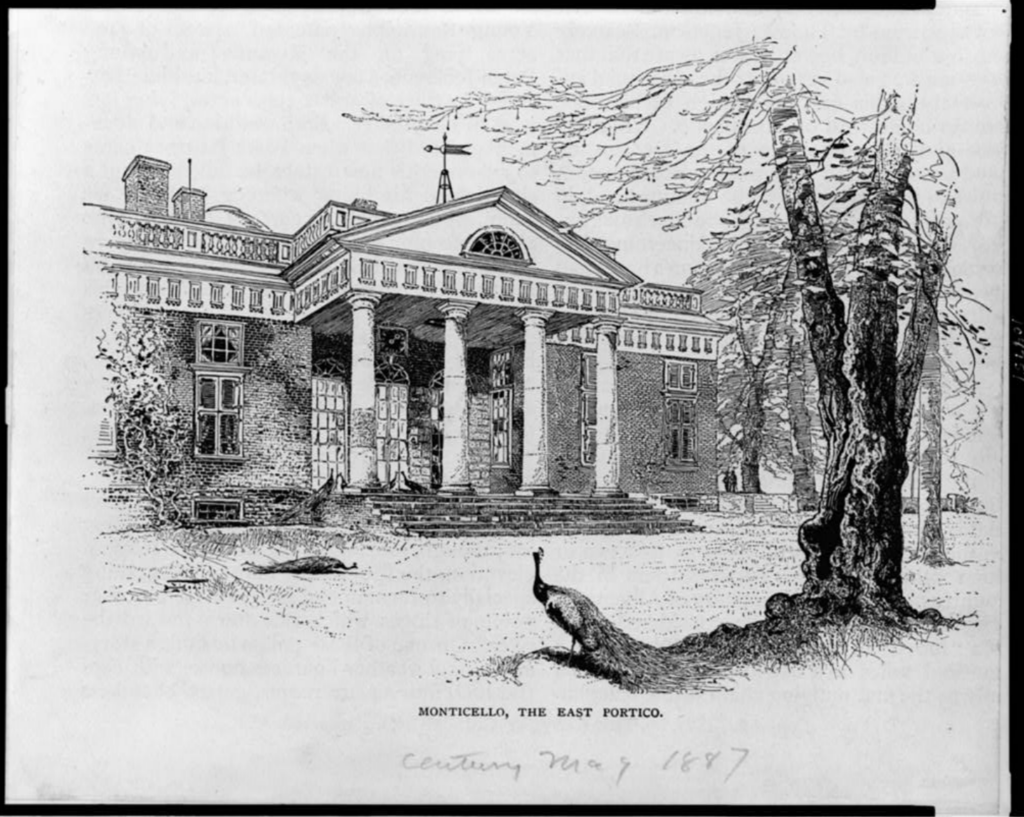
Engraving of the Monticello’s East Portico
While only communicating through Jefferson, Madison would go on to offer Monroe
several positions like the governor of the Louisiana Territory, but Monroe would reject them
claiming they were “incompatible with the respect he owed himself.” He told Jefferson he would
only accept a position that responded directly to the President. By May of 1810, Monroe visited
Madison in Washington and the two spoke for the first time in two years.
As their friendship was re-kindling, tension was rising in Madison’s cabinet. Treasury
Secretary Albert Gallatin and Secretary of State Robert Smith were in a constant feud. Madison
favored Gallatin, so when he threatened to resign, Madison removed Smith from office. With the
Secretary of State position open, Madison asked Monroe to fill its vacancy. Monroe would
accept the position under the condition that he would not back down from his foreign policy
beliefs.
Monroe and Madison’s friendship would continue to grow after Monroe’s appointment.
Eventually, he would also be appointed Secretary of War in tandem with his Secretary of State
position due to difficulties with the previous Secretary of War, John Armstrong Jr. and the
destruction of the White House. Madison trusted that Monroe would be able to handle both
positions, and he was able to help bring an end to the War of 1812. The Monroe family were also
regular attendees to Dolley Madison’s Wednesday night social events.
After Madison, Monroe was elected President. He often wrote to Madison for advice and
to review his policy. During his Presidency and into retirement, Monroe would visit Monticello
to see Jefferson and Madison. The time both men spent at Monticello with Jefferson were
moments of relaxation and joy. Once, Madison lost his shoe buckles and Monroe sent him new
ones.
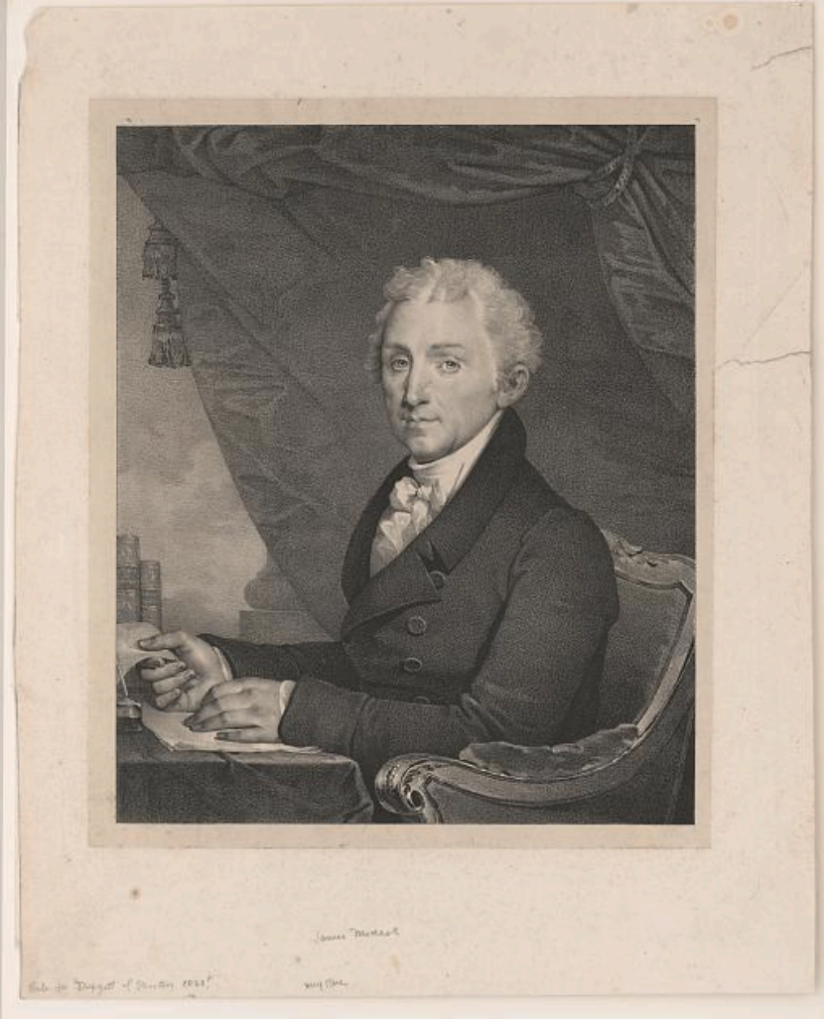
Monroe, 5th President of the United States
The greatest testament to their friendship are the letters sent toward the end of Monroe’s
life. The two wrote about Monroe’s displeasure in selling his estate in Loudoun due to his illness, preventing him from returning to Virginia. Monroe wrote to Madison saying he “deeply regrets” not being able to see him again and “that a final separation is among the most distressing incidents which could occur.” Madison would respond with “The pain I feel at the idea, associated as it is with a recollection of the long, close, and uninterrupted friendship which united us, amounts to a pang which I cannot well express and which makes me seek for an alleviation in the possibility that you may be brought back to us in the wanted degree of intercourse.” It’s interesting that Madison chose to call their friendship “uninterrupted” knowing that Monroe refused to talk to him for two years, but it is a testament to the strength of their friendship in the later half of their lives.
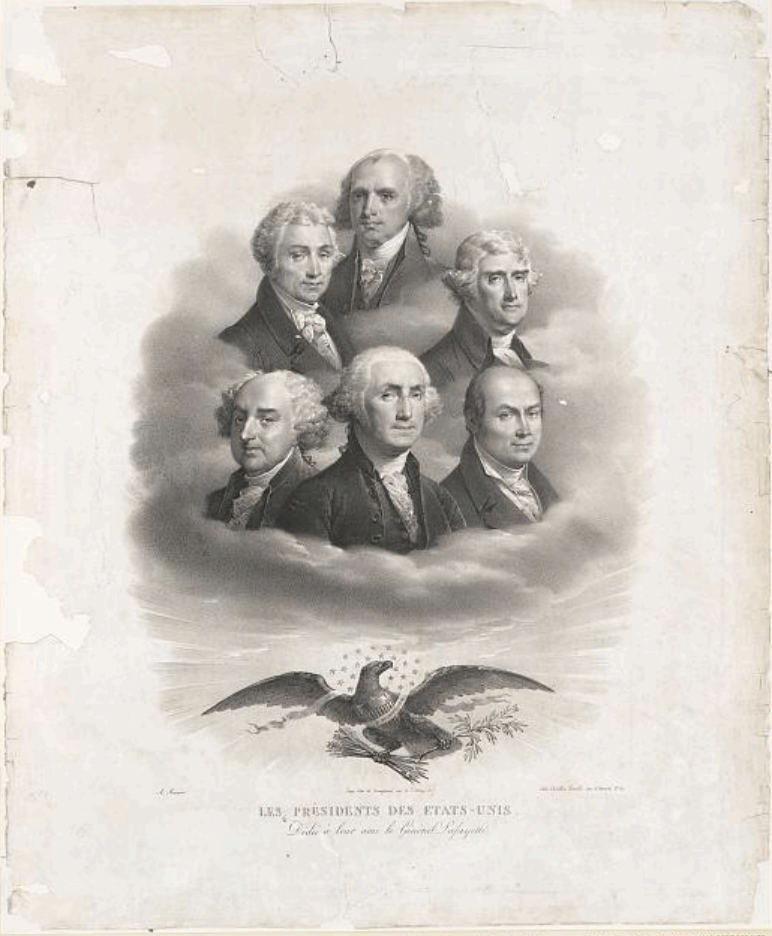
Lithograph of the Presidents of the United States 1790-1830. Monroe is featured on the
top left and Madison is featured in the top middle
Works Cited:
DeRose, Chris. Founding Rivals : Madison vs. Monroe, the Bill of Rights, and the Election That
Saved a Nation. Regnery History. 2011.
Jefferson, Thomas. Letter to James Monroe. 11 April 1808. Preston, Daniel, and Robert
Karachuk, ed. The Papers of James Monroe Digital Edition. Charlottesville: University of
Virginia Press, Rotunda, 2021– .
Leibiger, Stuart, ed. A Companion to James Madison and James Monroe. John Wiley & Sons,
Incorporated, 2012.
McGrath, Tim. James Monroe: A Life. Dutton Books, 2021.
Monroe, James. Letter to James Madison. 28 February 1808. Preston, Daniel, and Robert
Karachuk, ed. The Papers of James Monroe Digital Edition. Charlottesville: University of
Virginia Press, Rotunda, 2021– .
Monroe, James, and James Madison. James Madison to James Monroe. 1831. Manuscript/Mixed
Material. https://www.loc.gov/item/mjm020928/.
Monroe to Madison, 11 April 1831, James Monroe Collection, James Monroe Museum (ALS);
James Monroe Papers, Library of Congress (copy) [PJM 118145]
Monroe, James. Letter to John Randolph. 12 November 1806. Preston, Daniel, and Robert
Karachuk, ed. The Papers of James Monroe Digital Edition. Charlottesville: University of
Virginia Press, Rotunda, 2021– .
Stewart, David O. Madison’s Gift : Five Partnerships That Built America. First Simon&Schuster
hardcover edition. Simon & Schuster. 2015.
Images sourced from Library of Congress
You must be logged in to post a comment.